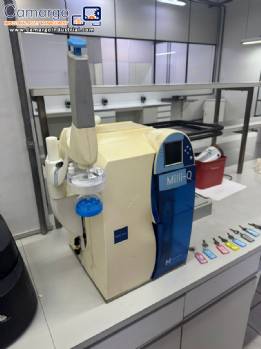
DEFINITION AND INDUSTRIAL IMPORTANCE
A particle size analyzer is a characterization instrument used to determine the particle size distribution of solid materials, powders, suspensions, emulsions, and nanoparticles.
Particle size analysis is considered a Critical Quality Attribute (CQA) in various industrial sectors because it directly influences:
Chemical reactivity.
Dissolution rate.
Bioavailability.
Physicochemical stability.
Texture and sensory properties.
Flow and compaction of powders.
Grinding efficiency.
Mechanical resistance.
Its application is essential in Quality Control (QC), Research and Development (R&D), process validation, and production optimization.
MAIN MEASUREMENT TECHNOLOGIES
2.1 LASER DIFFRACTION
The most widely used technology in industry for particle size analysis.
Physical principle:
Based on Mie or Fraunhofer theories. A laser beam is incident on dispersed particles, and the angular pattern of light scattering is captured by detectors. Mathematical algorithms convert this data into a volumetric size distribution.
Typical measurement range:
Approximately 10 nm to 3,000 µm (depending on the model).
Available configurations:
Dry system (pneumatic dispersion)
Wet system (liquid dispersion)
Modules with ultrasound.
Automatic sample feeding.
Inline and at-line systems for process monitoring.
Main parameters:
D10, D50, D90. Volumetric Distribution
Volumetric Average (Dv50)
Associated Standard:
ISO 13320
Applications:
Pharmaceuticals, mining, cement, fertilizers, polymers, pigments, powdered foods.
2.2 DYNAMIC LIGHT SCATTERING (DLS)
Suitable for nanoparticles and colloidal systems.
Physical Principle:
Measures variations in the intensity of light scattered by particles in Brownian motion. The hydrodynamic diameter is calculated from the Stokes-Einstein equation.
Typical Range:
1 nm to approximately 1 µm.
Measured Parameters:
Hydrodynamic Size
Polydispersity Index (PDI)
Zeta Potential (in combined models)
Applications:
Nanotechnology, biotechnology, proteins, liposomes, thin emulsions, pharmaceutical development. Associated Standard:
ISO 22412
2.3 NANOPARTICLE TRACKING ANALYSIS (NTA)
Advanced technology for individual nanoparticle analysis.
Principle: Optical microscopy with laser illumination tracks each particle individually, calculating the size based on Brownian motion.
Range:
10 nm to 2 µm.
Key Features:
Measures individual size
Determines concentration (particles/mL)
Applications:
Exosomes, viruses, vaccines, biomedical research.
2.4 COULTER COUNTER (Electrical Sensing Zone)
Electrical principle of volumetric measurement.
Operation: Particles suspended in an electrolytic solution pass through a micro-orifice with a constant electric current. Each particle generates an electrical pulse proportional to its volume.
Range:
0.5 µm to hundreds of micrometers.
Applications:
Pharmaceutical industry, biotechnology, cell analysis, suspension control.
2.5 IMAGE ANALYSIS
Principle:
Image capture by camera or digital microscope. Software performs morphological and dimensional analysis.
Additional parameters:
Circularity
Elongation
Aspect ratio
Surface roughness
Suitable for:
Minerals, abrasives, irregular particles, industrial sands.
2.6 SIEVE ANALYSIS
Traditional mechanical method.
Principle:
Physical separation by sieves with standardized meshes according to ASTM E11.
Range:
Above 38 µm.
Applications:
Mining, civil construction, aggregates, fertilizers.
TECHNICAL CRITERIA FOR SPECIFICATION AND PURCHASE
When selecting a particle analyzer, consider:
Required particle size range
Sample type (dry, wet, colloidal)
Need for morphological analysis
Regulatory requirements (FDA, GMP, ISO)
Integration with LIMS
Laboratory or inline operation
Total cost of ownership (TCO)
Availability of technical support in Brazil
IQ/OQ/PQ qualification
MAIN INTERNATIONAL MANUFACTURERS
Malvern Panalytical
Beckman Coulter
Anton Paar
Microtrac MRB
Horiba Scientific
Shimadzu
TSI Incorporated
Brookhaven Instruments
Fritsch GmbH
SUPPLIERS OPERATING IN BRAZIL
Malvern Panalytical Brazil
Anton Paar Brazil
Beckman Coulter Brazil
Horiba Brazil
Microtrac (distributors)
Fritsch (technical representatives)
INDUSTRY BENEFITS
Batch standardization
Rework reduction
Improved production efficiency
Grinding optimization
Regulatory compliance
Increased competitiveness
Rigorous quality control
KEYWORDS
particle size analyzer
industrial granulometric analyzer
granulometric analysis
industrial granulometry
laser diffraction
laser diffraction particle size analyzer
DLS dynamic light scattering
NTA nanoparticle tracking analysis
Coulter counter
particle size distribution
particle analysis equipment
characterizationMaterials
Laboratory quality control
Industrial laboratory equipment
Nanoparticle analyzer
Powder particle measurement
Particle analysis for the pharmaceutical industry
Mining laboratory equipment
ISO 13320 particle size analysis system |