Used machines for sale
Main brands:
Adonex, ALIC, Consolid, Ethik Technology, Exakt, FGG, Fritsch, Gehaka, IKA, JHM, Kroma, LAUDA, Lemaq, Luferco, Master Pump, Metalquim, Phoenix, Phoenix Luferco, QIAGEN, Solab, Tecnal, Thermo Fisher Scientific, Thermo Scientific, Tigre, Ultronique, Vötsch
|
| Laboratory equipment for research and development analysis |
In industry, research and development (R&D) laboratory equipment consists of instruments used by scientists, engineers, and technicians to create new products, improve existing formulations, and ensure that the final product meets quality, safety, and regulatory standards.
R&D equipment has strategic functions throughout the entire industrial development chain:
- Formulation and Recipe Development: Testing proportions of ingredients, reagents, or compounds on a small scale to find the ideal combination without wasting raw materials.
- Scale-up: Simulating, in small quantities, the behavior that the mixture, reaction, or transformation will have within large reactors or mixers.
- Physicochemical and Rheological Analysis: Evaluating the stability, texture, viscosity, melting point, pH, or behavior of the product under temperature variation.
- Performance and Stress Tests: Evaluating how the product withstands transport, shelf life, humidity, or compression (e.g., the hardness of a tablet or capsule).
- Pilot Quality Control: Ensure the prototype meets technical standards (pharmacopoeias, ISO standards, ANVISA, FDA, etc.) before authorizing the production line.
Categories and types of R&D equipment:
1. Processing and Formulation Equipment (Pilot/Bench Scale):
Designed to mix, react, dry, or shape raw materials in small quantities before large-scale production.
Examples:
- Mixing and Dispersion:
Benchtop mixers, mechanical stirrers, dispersers (such as Ultra-Turrax), and high-pressure homogenizers. Used to homogenize liquid phases, create stable emulsions (such as creams, ointments, and sauces), and dissolve powders uniformly in small volumes.
- Transformation and Drying:
Benchtop spray dryers, laboratory freeze dryers, and twin-screw extruders for R&D. These are used to transform liquid solutions into instant powder, dry heat-sensitive compounds (without degrading the active ingredients), and create granules, pellets, or filaments.
- Reaction and Synthesis:
Jacketed reactors (glass or stainless steel) and synthesis autoclaves. They allow precise control of temperature, pressure, and agitation speed during chemical reactions, organic syntheses, or fermentation processes.
- Compaction and Molding:
Single-punch tablet presses and pilot encapsulators (manual or semi-automatic). They mold test batches of tablets or fill capsules so that the R&D team can evaluate the physical viability of the formulation.
2. Physical and Rheological Analysis Equipment:
They measure the mechanical and structural properties and flow behavior of the developed materials.
Examples:
- Mechanical and Texture Testing:
Durometers (for capsules and tablets), texture analyzers, and friabilometers. - Measurement of the Force: They measure the force required to break, crush, deform, or puncture a product. They evaluate parameters such as the resistance of a capsule, the crispness of a food, or the firmness of a gel.
- Flow Behavior (Rheology):
Viscometers (rotational or cup) and rheometers (rotational or capillary). They evaluate the viscosity and behavior of liquids and gels under different temperatures and shear rates—essential for predicting how a syrup, ink, shampoo, or sauce will flow during packaging and end use.
- Thermal Properties:
DSC (Digital Scanning Calorimetry) and TGA (Thermogravimetric Analysis). They determine the melting point, glass transition temperature, purity, and thermal stability/decomposition of polymers, pharmaceuticals, and organic compounds.
3. Chemical and Structural Analysis Equipment:
Identifies the exact chemical composition, purity level, concentration, and molecular structure of compounds.
Examples:
- Chromatography:
HPLC (High-Performance Liquid Chromatography) and GC (Gas Chromatography). Separates, identifies, and quantifies each component present in complex mixtures (e.g., determining the exact dosage of the active ingredient in a drug or detecting impurities).
- Spectrometry and Spectroscopy:
FTIR (Fourier Transform Infrared), UV-Vis (Ultraviolet-Visible), and Mass Spectrometers (MS). Identifies the molecular "fingerprint" of raw materials and finished products, confirming the chemical structure and monitoring reactions in real time.
- Release and Dissolution Tests:
Tablet and capsule dissolution testers. They simulate the stomach and intestines to measure the rate and time it takes for an active ingredient to dissolve and be released into the body.
4. Preservation and Stability Equipment:
These equipment evaluate the behavior and degradation of the product over time and under extreme conditions.
Examples:
- Climate and Stability Chambers: These precisely control temperature and relative humidity to perform accelerated or real-time shelf-life tests, ensuring the product's validity.
- Water Activity Analyzers: These measure the free (unbound) water present in the sample. It is a critical indicator in food and cosmetics to predict the risk of fungal and bacterial growth. |
|
|
|
 |
Brand: JHM
Stainless steel coating machine with hot air blower and blade slats for coating dragees.
Manufacturer | Brand: JHM Máquinas.
Model: N-25.
Benchtop equipment.
With speed and temperature control.... |
|
|
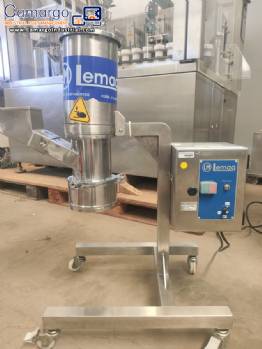 |
Brand: Lemaq
Components: Delta, WEG
Mini conical granulator with 316 stainless steel contact parts.
Manufacturer brand: Lemaq.
Nominal production capacity: 50 kg hour, depending on the product and screen / perforation used.
Equipment with stainless steel structure, product con... |
|
|
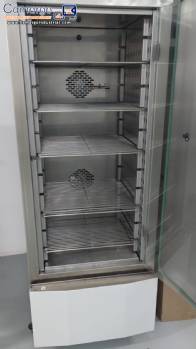 |
Brand: Ethik Technology
Climate chamber.
Manufacturer | Brand: Ethik.
Model: 420-2TS.
Approximate capacity: 295 liters.
Year: 2019.... |
|
|
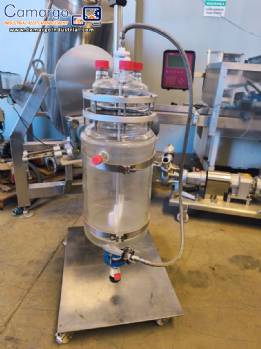 |
Brand: FGG
Borosilicate glass reactor for recirculation and agitation shaft.
Applications: Mixing, dissolution, homogenization, emulsification, and ambient temperature reactions for the pharmaceutical, cosmetic, fine chemical, and biotechnology industries.
... |
|
|
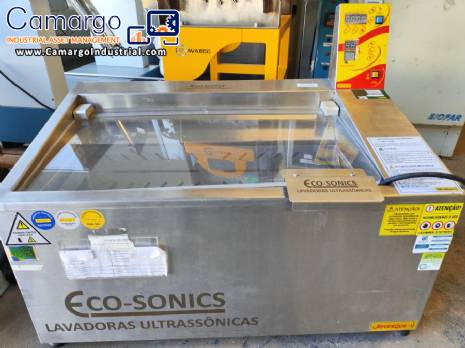 |
Brand: Ultronique
Benchtop stainless steel ultrasonic cleaner for laboratories.
Manufacturer: Ultronique.
Model: ECO 30.37 A.
Tank capacity: 30 Liters.
With side control panel.
With immersion heating element.
Ultrasonic Frequency: 37 kHz.
Ultrason... |
|
|
&c=461-761000&t=2 "00 L / 140 L 316L Stainless Steel CIP Reactor Tank Skid System Kroma Equipamentos (With URS Documentation & Data Sheet)") |
Brand: Kroma
Components: Allen-Bradley, ANRA Instrumentação e Válvulas Ltda, Bombinox, Microkits, NEWPACK, Pall, ProMinent, Rockwell, Schneider Electric, SED Flow Control, Sitron, Zurich
TRADUÇÃO PARA O INGLÊS / ENGLISH TRANSLATION
316 L stainless steel reactor mixing tank system mounted on a skid with centrifugal pump, dosing pump, and flow, product inlet, recirculation, and outlet actuators.
Brand / Manufacturer: Kroma Equipa... |
|
|
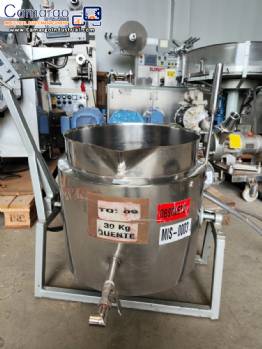 |
Brand: ALIC
Benchtop heated mixing reactor tank with jacket, made of stainless steel.
Manufacturer | Brand: ALIC.
Approximate volume: 30 liters.
Approximate internal dimensions:
Height: 310 mm.
Diameter: 380 mm.
Voltage: 220 V.
Benchtop reac... |
|
|
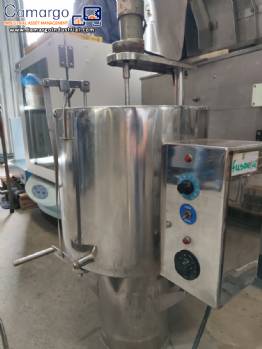 |
Benchtop mixing reactor tank heated by jacket and electric resistance.
Approximate total volume: 28.9 L.
Internal dimensions:
Internal height: 300 mm.
Diameter: 350 mm.
Benchtop reactor for cosmetics, food, chemical and other applicati... |
|
|
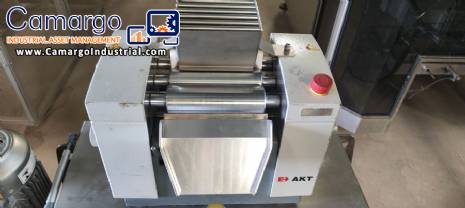 |
Brand: Exakt
Three-roll refiner for benchtop cylinders for R&D laboratories, quality control or micro-production of food, cosmetics, chemical industry among other sectors.
Manufacturer brand: Exakt three roll mill Germany.
Year: 2015.... |
|
|
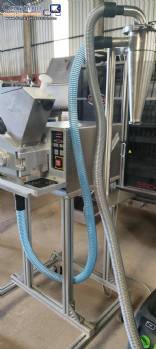 |
Brand: Fritsch
Universal mill for R&D development laboratory stainless steel 316 L or small productions.
Manufacturer brand: Fritsch.
Model: pulverisette 19 L.
Year of manufacture: 2021.
Model specification series: 19.4060/00003.
R.P.M according to m... |
|
|
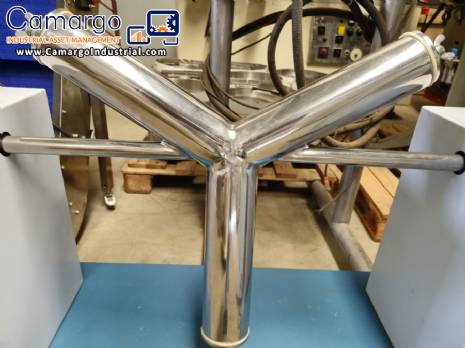 |
Brand: Tecnal
Benchtop Y-V mixer for laboratories.
Manufacturer: Tecnal.
Model: TE 201.
Body in polished stainless steel, internal part reacted to molybdenum test showing indication of 316 stainless steel, see photo 5.... |
|
|
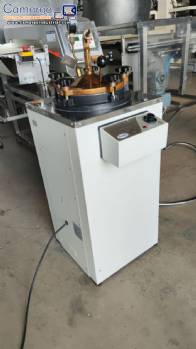 |
Brand: Luferco, Phoenix, Phoenix Luferco
Vertical autoclave.
Manufacturer/brand: Phoenix Luferco.
Line: AV.
Model: AV - 18.
Approximate capacity: 18 liters.
Year: 2021.
Voltage: 220V.... |
|
|
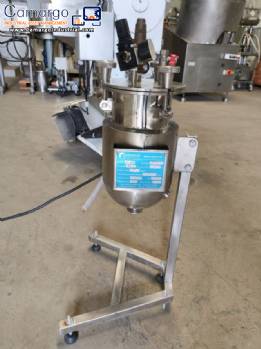 |
Brand: Consolid
Jacketed reactor with stainless steel resistance heating for laboratory.
Manufacturer/brand: Consolid.
Year: 2011.
Test pressure: 3 kgf / cm².
Maximum permissible working pressure: 2 kgf / cm².
Useful volume: 1.5 liters.
Total volum... |
|
|
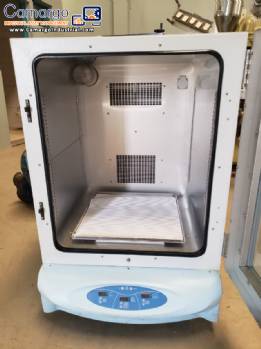 |
Brand: Thermo Fisher Scientific, Thermo Scientific
Shaker incubator with orbital agitation, heating, cooling and pressure.
For molecular biology, protein expression or plasmid purification.
For culture media for the growth of microorganisms and biochemical analyses.
Manufacturer: Thermo Scie... |
|
|
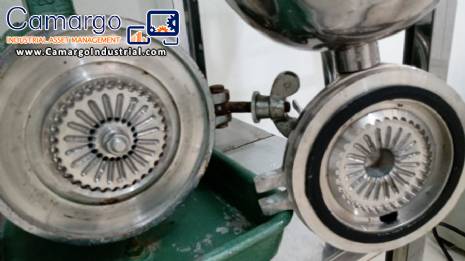 |
Stainless steel colloidal mill.
Bench equipment for laboratories or small production.
Engine with 1/3 CV
R.P.M: 3,500.... |
|
|
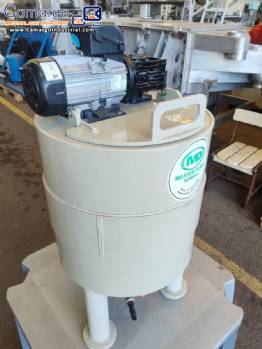 |
Brand: Master Pump
Polypropylene mixing tank.
Approximate capacity: 50 liters.
Manufacturer | brand: Master Pump.
With removable lid.
Tank with extended service life for use with chemical products.
Main applications: chemical and petrochemical industries... |
|
|
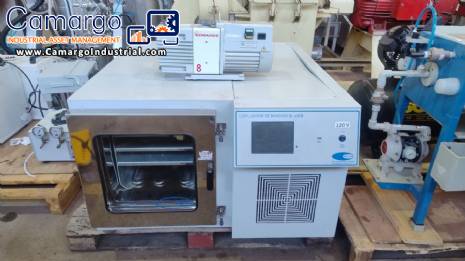 |
Brand: Edwards, Solab
Horizontal benchtop freeze dryer.
Manufacturer | brand: Solab.
Model: SL-405/B.
With high vacuum pump, Edwards brand, model RV8.
Laboratory freeze dryer | pilot is a piece of equipment for dehydrating samples, where it is possible to remo... |
|
|
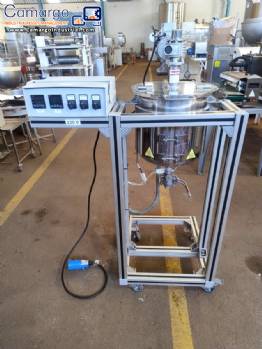 |
Brand: Metalquim
Heated mixer (jacketed) for laboratory / pilot.
Approximate capacity: up to 20 liters.
Manufacturer | brand: Metalquim.
Electronic panel with control switches, resistance and motor, and mass and jacket controllers.
Approximate dimensions:... |
|
|
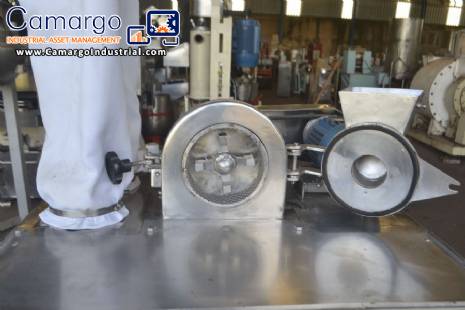 |
Brand: Tigre
Universal stainless steel hammer mill.
Manufacturer: Tiger.
Model: ML 20/5.
With filter and ventilation system.
Engine: 2 CV / rotation 800 RPM.
Approximate dimensions:
Height: 2.0 m.
Width: 800 mm.
Length: 1.0 m.
Mill Diam... |
|
|
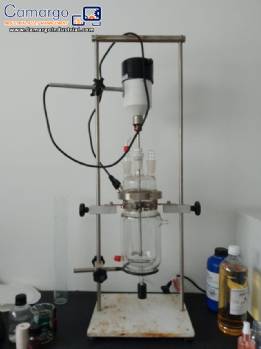 |
Brand: Adonex
Benchtop glass jacketed reactor.
Manufacturer | Brand: Adonex.
Approximate capacity: 1 liter | 1000 ml.
Year: 2023.
Unused equipment.
Equipment composed of a pumping and filtration system, developed to perform the filtration and transf... |
|
|
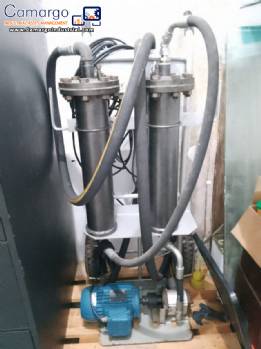 |
Components: Fanem Brasil
High-flow filter pump.
Motor manufacturer: Fanem Brazil.
Motor model: 713D.
Year of manufacture: 2023.
Motor power: 130 W.
Voltage: 115–230 V.
Frequency: 60 Hz.
Flow rate: High flow rate — nominal value to be confirmed.
Condit... |
|
|
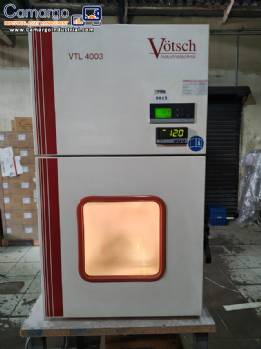 |
Brand: Vötsch
Internal bench climate chamber in stainless steel.
Manufacturer: Vötsch Industrietechnik GmbH. (Weiss Technik)
Model: VTL 4003.
It was used to test thermistors between 25 and 105 degrees.
For climate testing / environmental simulation.
... |
|
|
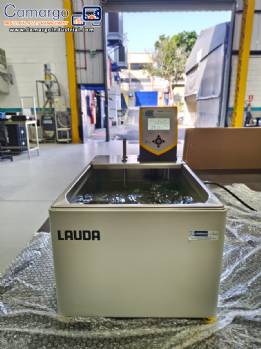 |
Brand: LAUDA
Benchtop thermostatic bath.
Model: E25 S.
Manufacturer | Brand: LAUDA.
ECO SILVER line.
With cooling coil.
For materials testing, quality control in laboratories and processes in the chemical, pharmaceutical and food industries, as wel... |
|
|
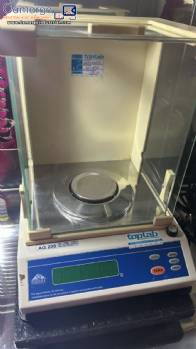 |
Brand: Gehaka
Analytical precision balance for laboratory use.
Manufacturer | Brand: Gehaka.
Model: AG200.
Capacity: up to 210 g.
Resolution: 0.1 mg (0.0001 g).
Features a protective glass chamber.... |
|
|
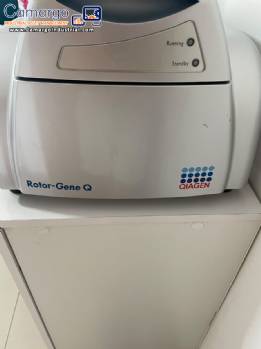 |
Brand: QIAGEN
Real-time PCR thermocycler.
Manufacturer | Brand: QIAGEN.
Model: Rotor-Gene Q.
With 5 optical channels (5plex).
Year: 2021.
The equipment was used for 3 years.
It was used for molecular biology tests and real-time PCR leukemia tests... |
|
|
 |
Durometer and friabilometer: New Ethics for tablet and capsule testing.
Manufacturer | Brand: Nova Ética.
- Digital Durometer:
Equipment specifically designed for performing hardness tests on tablets.
For companies in the agricultural, nu... |
|
|
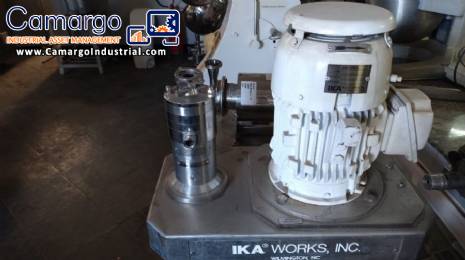 |
Brand: IKA
Dispersing, emulsifying and homogenizing mill.
Manufacturer | Brand: IKA.
Model: DR 2000-4.
Approximate capacity: up to 500 kg / hour.
With high shear, Brand: IKA Model:
Year: 2010.
Equipment has never been used.
Machine stopped ... |
|
|
| |
| |
|