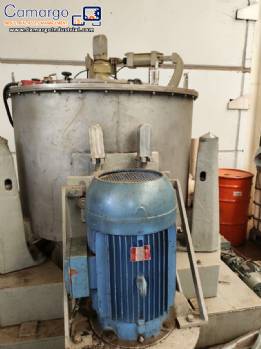
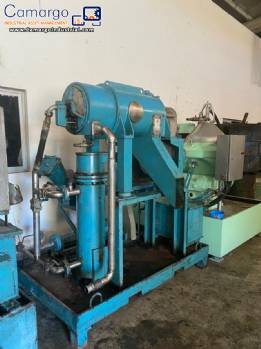
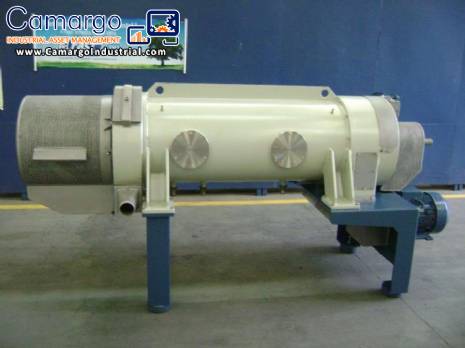
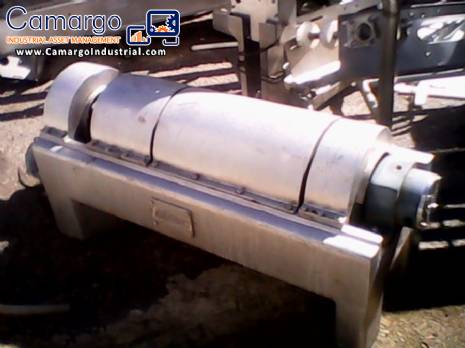
Technical and Functional Dossier: Decanter Centrifuge Technology and Engineering
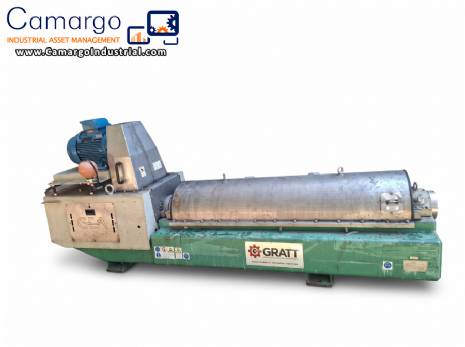
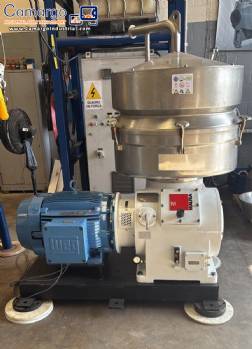
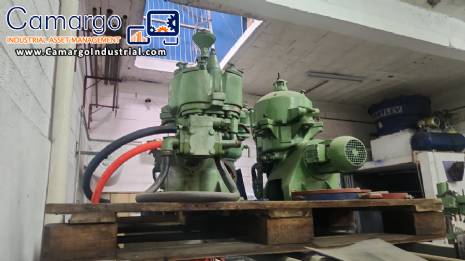
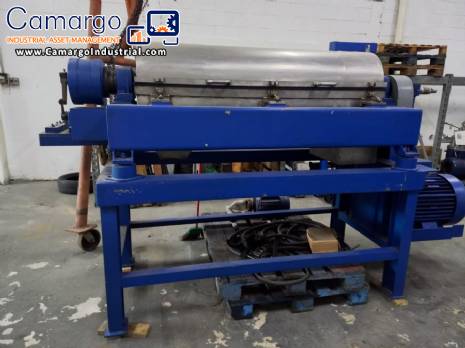
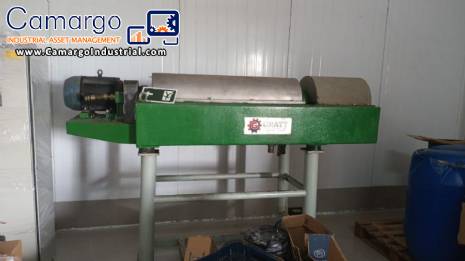
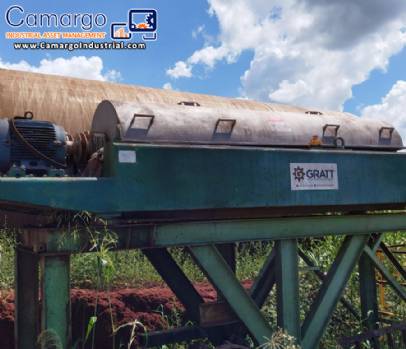
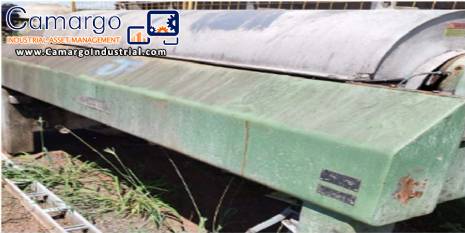
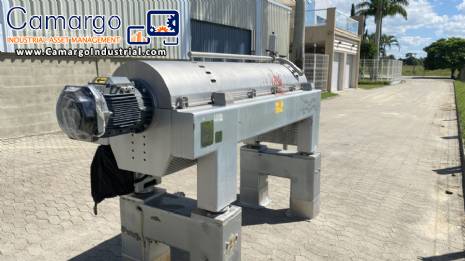
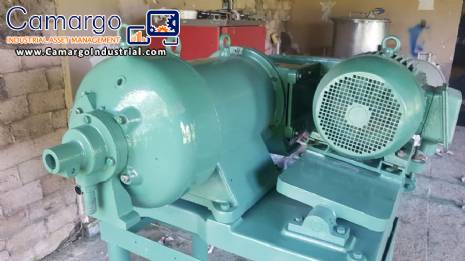
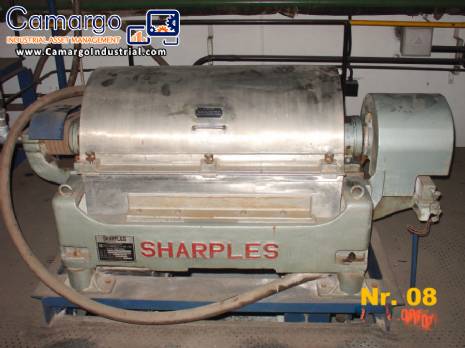
An industrial decanter, also widely known in the market as a decanter centrifuge or solid-bowl centrifuge, is high-precision mechanical equipment used for the continuous separation of liquids from solids, or the separation of immiscible liquids with different densities. They play a crucial role as the operational heart in various industries, such as food processing, chemicals, petrochemicals, wastewater treatment, mining, and bioenergy.
Unlike classical gravitational clarifiers or settling tanks, which rely on the Earth's gravity to slowly separate particles, the decanter centrifuge operates as a dynamic continuous reactor. It rotates at incredibly high speeds to generate an artificial centrifugal force field that frequently exceeds 4,000g. This extreme acceleration multiplies the density difference between the phases, enabling separations in a matter of seconds within a compact and hermetically sealed structure.
What an Industrial Decanter is Used For: Applications and Objectives
Industrial decanters are highly efficient, versatile, and can be customized to meet a wide range of industrial applications, making them an essential tool in processes involving purification, recovery, and environmental compliance:
Solid-Liquid Separation: The primary function of a decanter centrifuge. It is vital in situations where it is necessary to recover valuable solids from a liquid, separate particles from a process fluid, or treat effluents. In dry stacking (mining), for instance, it replaces hazardous tailings dams by continuously dewatering the mineral slurry.
Clarification: Used to clarify liquids by removing solid particles or ultrafine suspended sediments. This is common in the primary clarification of beer wort, unfiltered fruit juices, and the rigorous treatment of industrial wastewater.
Concentration and Thickening: They concentrate solid particles present in a liquid, resulting in a much thicker paste (biosolid) and a clearer liquid. It is the leading technology for the thickening of biological sludge in Wastewater Treatment Plants (WWTP).
Oil and Fat Extraction: In the oil and gas industries, biofuels, and vegetable oil processing (such as olive oil and palm oil), centrifuges separate the pure oil from the process water and solid impurities (pomace or cake), maximizing extraction yield.
Recycling and Fine Chemicals: In modern recycling processes, decanters dewater polymeric suspensions (such as recycled PVC and HDPE). In fine chemicals, they separate lithium crystals for batteries and isolate purified plant proteins.
How an Industrial Decanter Works: Process Phases and Fluid Dynamics
Decanters operate based on the principle of centrifugal force applied to a horizontal rotating bowl. The typical and continuous operation process occurs in the following dynamic stages:
Feed Zone: The raw mixture of liquid and solids is fed into the decanter through a stationary central tube. The feed chamber is aerodynamically designed to gently accelerate the mixture to the peripheral speed of the bowl, avoiding excessive shear that could break delicate flocs or crystals.
Centrifugal Separation (Cylindrical Zone): Inside the decanter, the mixture is subjected to extreme G-force. This causes the solid particles, being denser, to be thrown against the inner wall of the bowl. The lighter liquid forms a concentric ring closer to the center. The volume of retained liquid is called the "pond," and its depth is regulated by weir plates to optimize clarification time.
Solid Discharge (Conical Zone): An internal scroll (conveyor or screw) rotates concentrically with the bowl, but at a slightly different speed. This scroll acts like an Archimedes screw, scraping the solid particles from the wall and pushing them toward the conical section (the "drying beach"). The compression force expels residual liquid, forming a dewatered solid cake that is ejected from the equipment.
Clarified Liquid Discharge: The clean, clarified liquid flows in the opposite direction of the solids, toward the cylindrical end, where it overflows by gravity or is pumped out by impeller tubes (centripetal pumps).
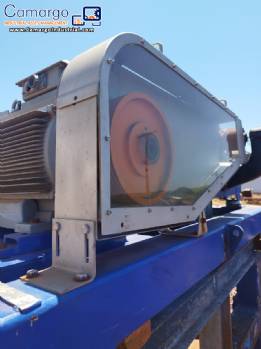
Speed and Torque Control: The rotational speed of the bowl and the differential speed of the scroll are actively adjusted via Variable Frequency Drives (VFDs using PID control). Speed control optimizes separation by responding in real-time to variations in the solid load of the feed mixture.
Advanced Systems: The Tricanter (3-Phase Separation)
In addition to the standard 2-phase configuration, there is the Tridecanter (or 3-phase centrifuge). It is capable of extracting one solid and two immiscible liquids (such as water and oil) simultaneously.
The solid exits through the conical end, while the liquids are separated through independent channels: the heavier liquid exits under pressure through capillary tubes or a centripetal pump, and the lighter liquid flows through the center of the axis.
Tribology, Materials, and Wear Protection
The mechanical stresses generated at high rotations demand advanced metallurgy. The bowls are constructed from Duplex Stainless Steels (such as EN 1.4462), ensuring mechanical strength and immunity to chloride stress corrosion cracking. Because the scroll suffers constant erosion while transporting solids, its flights receive robotic hardfacing with Sintered Tungsten Carbide tiles or Stellite alloys. The solid discharge ports are fitted with Technical Ceramic inserts (Silicon Carbide) to prevent abrasive wear.
Operational Metrics (OPEX) and Predictive Diagnostics
To ensure financial viability, OPEX is optimized through the precise dosing of polymers (cationic flocculants to agglomerate ultrafine particles) and regenerative drive systems (back-drive), which recover the braking energy from the scroll to power the main motor. Operationally, diagnostic systems monitor vibration in real-time to prevent "chatter" (torsional resonance that can cause mechanical failure) and track bearing temperatures, ensuring uninterrupted and safe operation.
Market Mapping: Key Industrial Manufacturers
Cutting-edge technology is developed by a select group of companies, ranging from global giants to national powerhouses:
Tier 1 Globals:
Alfa Laval (Sweden): Famous for energy efficiency in biopharmaceuticals, marine wastewater, and vegetable oil extraction.
GEA Westfalia (Germany): Experts in precision for biotechnology and dynamic automation without downtime.
Flottweg (Germany): World leaders in robust hydraulic drives and high-load Tricanter configurations.
Andritz (Austria): Dominance in heavy-duty equipment for extreme drying of mining tailings and large municipal plants.
Pieralisi (Italy): Agro-industrial giant, with a strong presence in continuous olive oil processing plants.
National Manufacturers (Brazil):
Fast Indústria e Comércio (SC): The largest 100% Brazilian player, leader in palm oil clarification in Latin America, basic sanitation, cutting-edge automation, and rendering plants.
Gratt Indústria e Tecnologia Ambiental (SC): Strong presence in environmental technology, treatment of complex industrial wastewater, and recovery of bioactives and by-products.
JDF Centrífugas (SP): Excellence in the sugar-energy sector, manufacturing rugged decanters for aggressive vinasse and providing essential multi-brand retrofit services in the heart of Brazil's sugarcane region.
Atlântica Separadores / Centrimac (SP): Traditional manufacturers for sludge thickening and medium-sized industries, providing agile maintenance and parts supply for the Southeast industrial basin. |